Zero-Day Exploited:RoguePlanet Vulnerability Threatens Microsoft Defender Fortifications
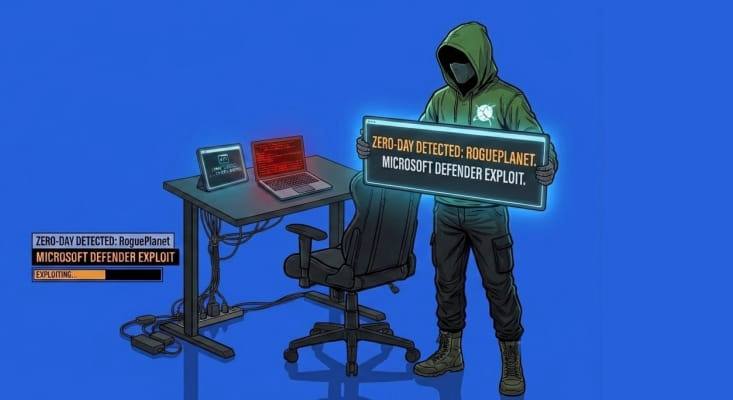
In the high-stakes theatre of cybersecurity, even the most robust defenses can face unprecedented challenges. Today, we address a critical development: Microsoft has formally acknowledged a zero-day vulnerability within its widely deployed Microsoft Defender security suite. This exploit, internally tracked as 'RoguePlanet', represents a significant breach in the digital perimeter and demands immediate attention from all operational units.
**What We're Facing: The RoguePlanet Breach**
The vulnerability, now assigned the Common Vulnerabilities and Exposures identifier CVE-2026-50656, carries a CVSS score of 7.8, classifying it as a serious security risk. Microsoft has described it as a privilege escalation flaw. In essence, this means that an unauthorized entity could potentially exploit RoguePlanet to elevate their access privileges on a compromised system. Imagine an enemy operative, having infiltrated a low-security outpost, using a discovered weakness to gain access to the central command module. This is the conceptual parallel: an attacker could leverage this flaw to move from a less privileged position to one with administrative control, granting them unfettered access to sensitive data and system functionalities.
At present, little is publicly known about the specific vectors through which this exploit is launched. However, its presence as a zero-day implies actively undiscovered and unpatched exploitation in the wild. This is a critical distinction – it means that traditional signature-based detection may be ineffective, and systems are vulnerable until a patch is deployed.
**Strategic Implications: Why This Threat Matters**
The impact of the RoguePlanet vulnerability is profound. Microsoft Defender is a cornerstone of endpoint security for millions of individuals and organizations worldwide, including vital infrastructure and sensitive corporate networks. A successful exploitation could lead to a cascade of malicious activities:
* **Data Exfiltration:** Attackers with elevated privileges can access, copy, and exfiltrate highly sensitive personal, financial, or proprietary data.
* **System Compromise and Control:** Gaining administrative control allows attackers to deploy malware, manipulate system settings, disable security controls, or even use the compromised system as a pivot point for further network intrusion.
* **Ransomware Deployments:** With escalated privileges, ransomware operations can be initiated with a higher likelihood of success, encrypting critical files and demanding hefty ransoms.
* **Disruption of Operations:** For businesses and government entities, a widespread compromise can lead to significant operational downtime, financial losses, and reputational damage.
* **Supply Chain Risk:** If an organization's trusted systems are compromised, it can create vulnerabilities within a broader supply chain, impacting partners and clients.
Given that RoguePlanet is a privilege escalation flaw, the severity is amplified. It moves an attacker from potentially limited impact to full system commandeering.
**Operational Readiness: Protecting Your Digital Assets**
While Microsoft has confirmed development of a patch, immediate defensive measures are paramount. CYPEIRA recommends the following tactical actions:
1. **Heightened Monitoring and Threat Hunting:** Implement enhanced logging and real-time monitoring of your endpoints. Actively hunt for anomalous processes, unusual network connections originating from Defender services, and any signs of privilege escalation attempts. Utilize advanced threat intelligence feeds to stay abreast of emerging indicators of compromise (IOCs) related to CVE-2026-50656.
2. **Assume Breach Mentality:** Until a patch is deployed and verified, operate under the assumption that your environment may already be compromised or is under active threat. Review access logs for unusual activity, especially from accounts that have recently gained elevated privileges unexpectedly.
3. **Network Segmentation and Least Privilege:** Reinforce network segmentation to limit the lateral movement of potential attackers. Enforce the principle of least privilege for all user and service accounts. This means users and applications only have the permissions absolutely necessary to perform their functions, making privilege escalation harder.
4. **Vulnerability Management Augmentation:** While waiting for the official Microsoft patch, explore and deploy any interim security measures recommended by Microsoft or reputable third-party cybersecurity firms. This might include specific configuration changes in Defender or other security layers that could mitigate the risk of exploitation.
**Conclusion: Vigilance is Our Best Defense**
The discovery of the RoguePlanet zero-day within Microsoft Defender underscores the persistent and evolving threat landscape. It serves as a stark reminder that even foundational security tools are not immune to sophisticated attacks. Maintaining vigilance, implementing proactive security measures, and responding swiftly to confirmed threats are non-negotiable for safeguarding our digital operational integrity.
Reference: The Hacker News (https://thehackernews.com/2026/06/microsoft-confirms-rogueplanet-defender_02022423645.html)
COMMAND ACCESS REQUIRED
To view the full encrypted log sequence and deployment mitigation protocols, biometric authentication is mandatory.